How to Read a Dog Food Label: What Are You Really Feeding Your Dog?
Picking up a bag of dog food should make it easy to understand what you’re feeding your dog.
Unfortunately, it doesn’t always feel that way.
Composition. Analytical constituents. Crude ash. Additives. Complete food.
Then there are percentages, nutritional claims and ingredient descriptions to decipher.
It can quickly become confusing.
But once you understand what the different parts of a dog food label actually mean, comparing foods becomes much easier.
So, in this Broadleaf Dog Guide, we’re going to take the jargon out of dog food labels and show you what to look for when choosing your dog’s food.
1. Start with the Composition
If you want to know what’s actually in your dog’s food, this is usually the best place to start.
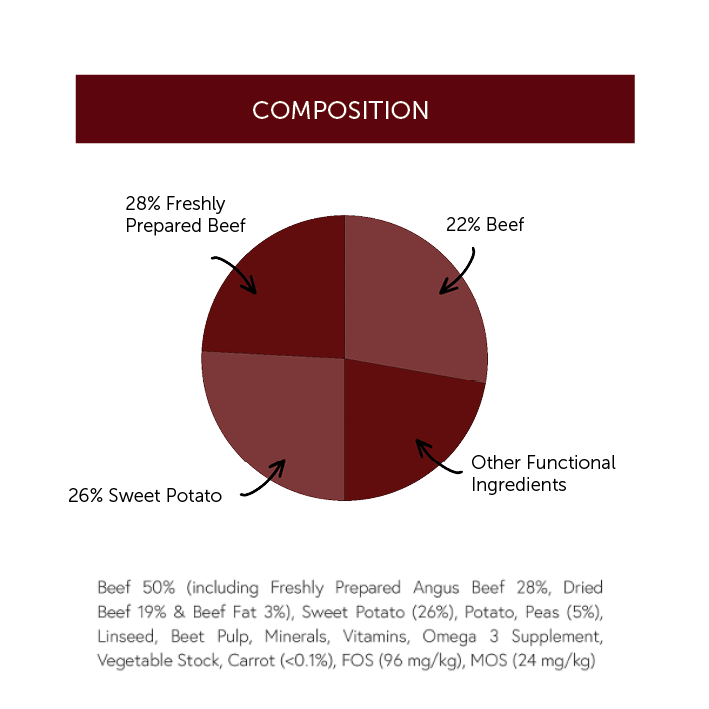
On UK pet food labels, ingredients are listed under Composition, in descending order by weight. In other words, the ingredient present in the greatest quantity when the food is formulated appears first, followed by the next highest, and so on.
So if you see something like:
Chicken (30%), sweet potato (20%), peas, lentils…
you immediately have some useful information about what makes up the recipe.
But there’s something else worth noticing.
Pet food manufacturers are allowed to declare ingredients either by their specific names or by legally defined category names.
That’s why one label might say:
Chicken, turkey, sweet potato, peas…
while another might contain descriptions such as:
Meat and animal derivatives, derivatives of vegetable origin…
Importantly, the use of category descriptions does not by itself mean that a food is lower quality. UK Pet Food points out that category labelling can allow manufacturers flexibility in the ingredients used, including according to availability.
However, if knowing exactly which ingredients and protein sources you’re feeding matters to you, individually named ingredients provide greater transparency.
What to look for
Rather than simply looking at the attractive claims on the front of the bag, turn it around and ask:
Can I clearly identify the main ingredients and protein sources?
That’s often far more informative.
2. Look at the Meat or Fish Content – But Read the Detail
You will often see a percentage attached to a meat or fish ingredient.
For example:
Freshly prepared chicken 30%
or
Salmon 20%
Percentages can be useful because they help you understand how much of a highlighted ingredient has actually been used.
In fact, where particular attention is drawn to an ingredient — for example, a food marketed as being “with chicken” — the percentage of that ingredient must be declared.
But don’t judge a food from one large percentage on the front of the packet.
Look at the whole composition.
A recipe might contain several different animal ingredients — chicken, turkey, salmon or another source of animal protein, for example — which together account for considerably more of the recipe than any single percentage suggests.
Likewise, look at how clearly those ingredients are described.
The aim isn’t simply to find the biggest number.
It’s to understand what that number represents.
3. Fresh Meat, Dried Meat and Meat Meal – What’s the Difference?
This is another area where labels can become confusing.
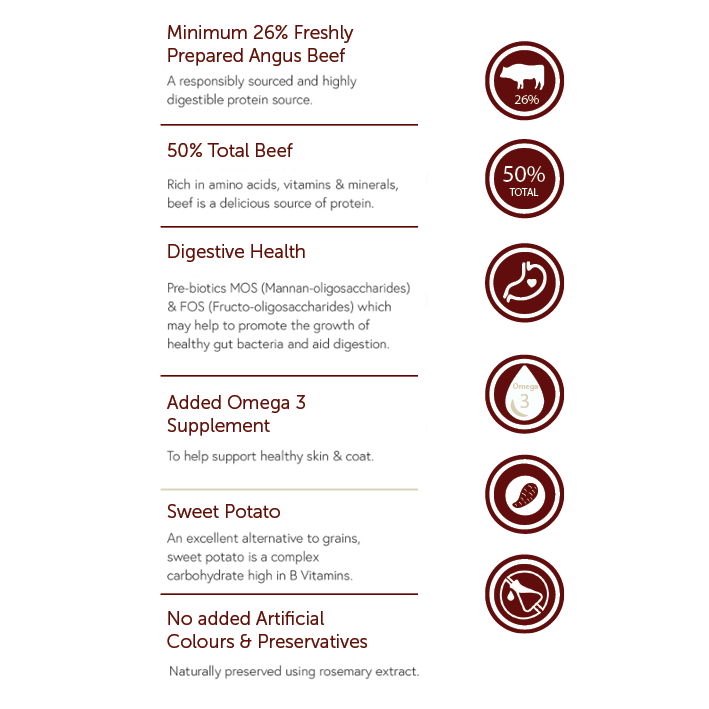
Fresh or freshly prepared meat
Fresh meat naturally contains a significant amount of water.
That matters because ingredients are listed by weight at the point they’re incorporated into the recipe. During the production of dry dog food, much of that moisture will subsequently be removed.
So you shouldn’t automatically compare a percentage of fresh meat directly with the same percentage of a dried ingredient as though they’re identical.
Dried meat
As the name suggests, much of the moisture has already been removed.
It is therefore more concentrated by weight than the equivalent amount of fresh meat.
Meat meal
Meat meal is produced from animal material that has been processed and dried into a concentrated ingredient used in pet food.
The important lesson here is that terms such as fresh, dried and meal describe different forms of ingredients.
That’s why it’s worth looking beyond a single percentage and considering the overall recipe, the sources of animal protein and how clearly the manufacturer explains the ingredients they use.
At Broadleaf, we also believe how we prepare ingredients matters, which is why our previous Dog Guide explored how the Freshtrusion® process incorporates freshly prepared meat and fish into our dry foods.
4. Does a Higher Protein Percentage Mean Better Dog Food?
Not necessarily.
It’s tempting to compare two bags and conclude:
Food A: 30% protein
Food B: 24% protein
Therefore Food A must be better.
But the percentage alone doesn’t tell you the whole story.
Protein can come from different ingredients and sources, and how effectively a dog can digest and utilise that protein also matters.
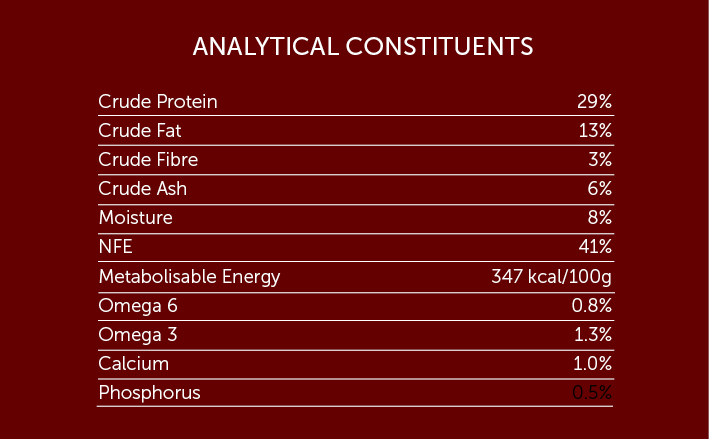
This is why we think it’s useful to read the Composition and Analytical Constituents together.
Instead of asking only:
“How much protein does this contain?”
also ask:
“Where is that protein coming from?”
That’s a much more useful question.
5. What Are ‘Analytical Constituents’?
This is probably one of the least consumer-friendly phrases you’ll find on a bag of dog food!
But it’s actually quite straightforward.
Think of Analytical Constituents as a nutritional analysis of the finished food.
For dog and cat foods, labels include figures such as:
Crude Protein – the measured protein content.
Crude Oils & Fats – the fat content.
Crude Fibre – an indication of fibre content.
Crude Ash – the mineral content determined through laboratory analysis.
You’ll also see moisture declared where it exceeds 14%.
And there’s one particularly unfortunate term here that sometimes worries dog owners…
What does ‘crude ash’ mean?
It doesn’t mean somebody has put ash into your dog’s dinner.
It’s essentially a laboratory measurement representing the mineral content that remains after laboratory analysis burns away the rest of a food sample.
So don’t see the word ash and immediately assume it’s an unwanted ingredient.
It isn’t an ingredient at all.
6. What Does ‘Complete Dog Food’ Mean?
This is a small word with an important meaning.
A complete pet food provides the nutrients a dog needs as its daily diet when you follow the appropriate feeding instructions.
A complementary food doesn’t provide everything your dog needs on its own, so you should feed it as part of a wider diet. Treats and some mixers and supplements fall into this category.
So if you’re buying your dog’s main everyday food, look for Complete Dog Food on the label.
You’ll also want to check that the food is appropriate for your dog’s life stage — for example puppy, adult or senior — where applicable.
7. What About Additives?
The word additive can sound negative, but this is another area where it’s worth understanding what the label actually means.
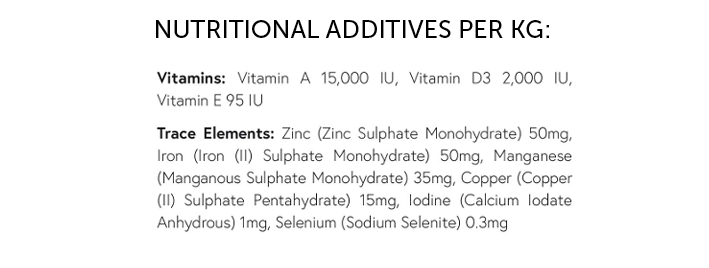
Additives can perform different functions within pet food. They can include vitamins, trace elements and amino acids added to help ensure a food provides appropriate nutrition, as well as technological additives used for purposes such as preservation.
So seeing an Additives section isn’t automatically something to worry about.
Instead, look at what those additives are and why they’re there.
Pet food manufacturers must declare certain additives on their labels, while they can choose to declare others voluntarily. Added vitamins A and D, for example, are subject to specific declaration requirements.
If something isn’t clear, don’t be afraid to ask the manufacturer.
A good pet food company should be willing to explain what’s in its food.
8. What Does ‘Grain-Free’ Actually Tell You?
Grain-free tells you something useful — but it doesn’t tell you everything.
Quite simply, it means the recipe has been formulated without grains.
But “grain-free” alone isn’t a measure of the overall quality of a dog food.
You still need to look at what has been used instead.
That brings us straight back to the Composition.
Look at:
What are the main ingredients? Where does the protein come from? What carbohydrate sources are being used? How clearly are those ingredients identified?
The words on the front of the bag should never replace reading what’s on the back.
9. Don’t Forget the Feeding Guide
There’s one final part of the label that dog owners can easily overlook.
The feeding guide.
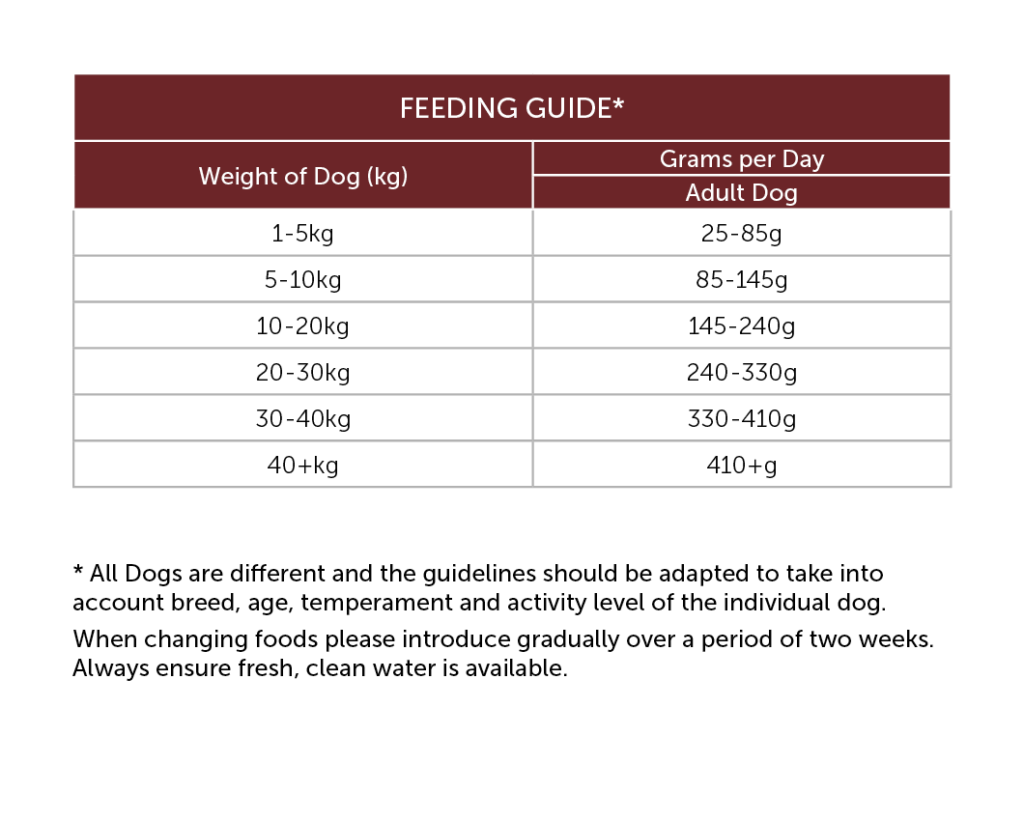
Even a carefully formulated food needs to be fed in an appropriate quantity.
UK pet food regulations require manufacturers to provide feeding instructions, but they’re exactly that — a guide.
Your dog’s individual needs can vary according to factors such as their size, age and activity level. UK Pet Food similarly notes that individual nutritional requirements vary and recommends using feeding information as a guide.
Monitor your dog’s weight and body condition and adjust appropriately, seeking professional veterinary advice if you’re unsure.
And, of course, fresh drinking water should always be available.
The 5 Questions to Ask When Reading a Dog Food Label
You don’t need to become a canine nutritionist every time you buy a bag of food.
Start with five simple questions:
- What are the first few ingredients?
- Can I clearly identify the main animal protein sources?
- What proportion and type of meat or fish is being used?
- What do the analytical constituents tell me about the finished food?
- Is it a complete food appropriate for my dog?
If a label gives you clear answers to those questions, you’re already in a much better position to make an informed choice.
Look Beyond the Front of the Bag
Pet food packaging has limited space, and naturally the front of the bag is where brands tell you what makes their food appealing.
But some of the most useful information is usually on the back.
The Composition tells you what went into the recipe.
The Analytical Constituents tell you something about the finished food.
The Additives section gives you more information about what manufacturers add to the food and why.
The product description tells you whether the food is complete or complementary and which dogs it is suitable for.
Once you know how to interpret those sections, dog food labels become much less mysterious.
At Broadleaf Grain Free, we believe dog owners should understand what they’re putting into their dog’s bowl — from the ingredients and where they come from, to how we prepare them.
Because the better you understand the label, the better informed your choice can be.