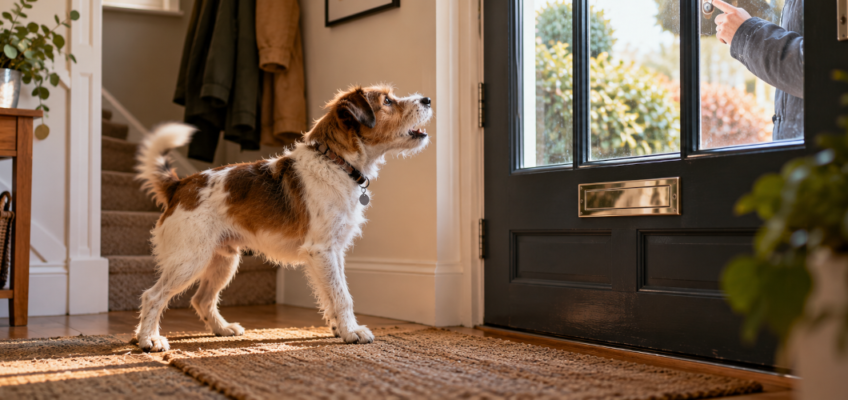
Why Does Your Dog Go Crazy When the Doorbell Rings?
Ding dong!
And suddenly, your normally peaceful home erupts into a chorus of barking, frantic running and perhaps even a little jumping at the front door!
Sound familiar?
With Halloween approaching and trick-or-treaters preparing to make their rounds, the doorbell might be getting more attention than usual this weekend.
But whether it’s an unexpected visitor, the postman or a delivery driver, why do some dogs react so dramatically whenever someone comes to the door?
And more importantly, what can you do to help them stay calm?
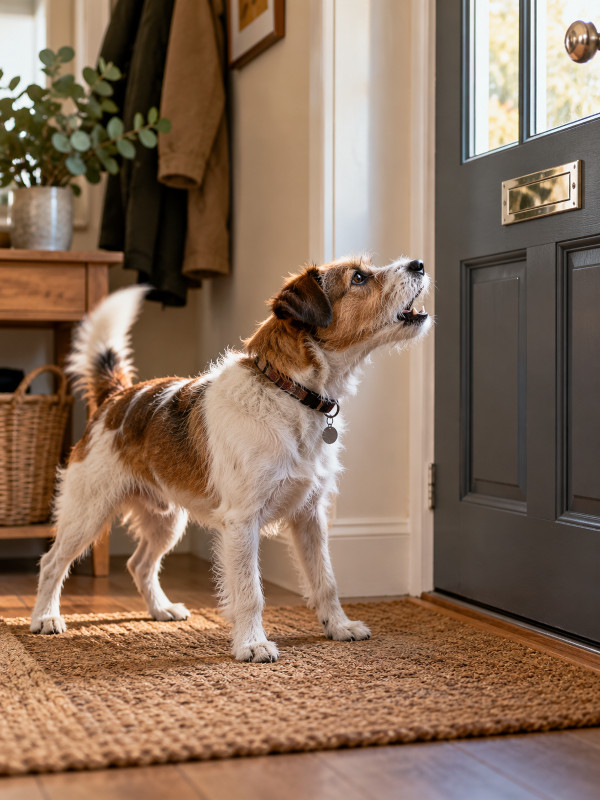
Why Do Dogs Bark When the Doorbell Rings?
For many dogs, the sound of the doorbell has become a signal that something exciting, unusual or potentially worrying is about to happen.
Dogs quickly learn to associate particular sounds with events. And if the doorbell usually means someone arriving at the house, it’s hardly surprising that they react!
However, not all dogs bark for the same reason.
Some are simply excited at the prospect of meeting someone new. Others may feel anxious about an unfamiliar person approaching their home.
And some dogs bark because they’re naturally alert to changes in their surroundings.
The important thing to remember is that barking is a form of communication, not necessarily bad behaviour.
Understanding what’s behind your dog’s reaction is the first step towards helping them feel more comfortable.
Is Your Dog Excited, Anxious or Being Protective?
Although the barking might sound similar, your dog’s body language can offer clues about how they’re feeling.
An excited dog might wag their tail with a loose, wiggly body, bounce around enthusiastically or rush towards the door hoping to greet someone.
An anxious dog may appear tense, retreat from the entrance, hold their ears back or bark while keeping their distance.
An alert or territorial dog might stand stiffly, focus intently on the door and bark repeatedly when someone approaches.
Of course, dogs can experience several emotions at once, and a wagging tail doesn’t always mean they’re happy.
Rather than focusing solely on the barking, try observing your dog’s overall behaviour.
This can help you decide whether they need reassurance, a calmer greeting routine or a little extra training.
Why Shouting at Your Dog Rarely Helps
When your dog starts barking frantically, it’s tempting to raise your voice and tell them to be quiet.
Unfortunately, this can sometimes make matters worse.
Your dog may interpret the additional noise as confirmation that something exciting or alarming is happening.
And if they’re already frightened or anxious, shouting can increase their stress.
Instead, try to remain calm and avoid adding to the commotion.
The goal isn’t simply to stop the barking. It’s to teach your dog that the doorbell doesn’t have to mean chaos.
5 Simple Ways to Encourage Calmer Behaviour
The good news is that with patience, consistency and positive reinforcement, many dogs can learn to respond more calmly when someone comes to the door.
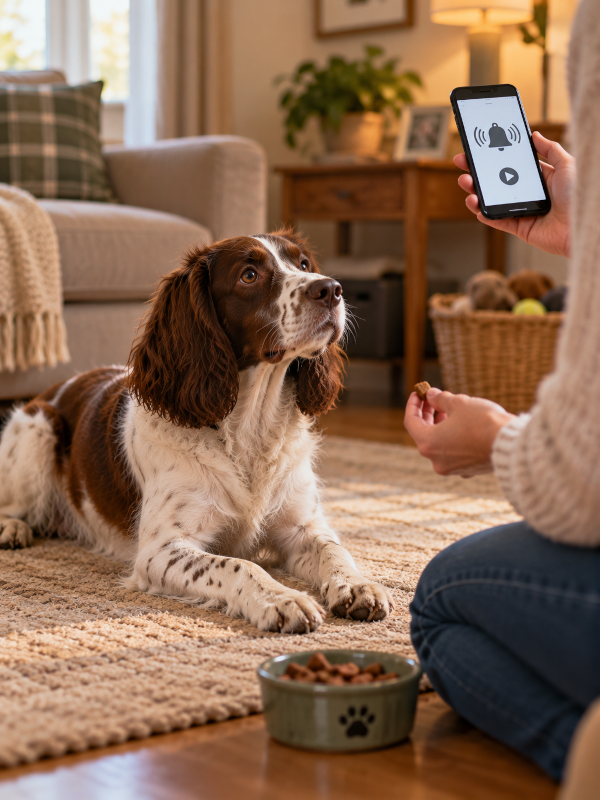
1. Practise When Nobody Is Visiting
Don’t wait until the delivery driver arrives to start training!
Try playing a recording of your doorbell at a very low volume when your dog is relaxed.
Reward them for remaining calm, gradually increasing the volume over several sessions.
If they begin barking or showing signs of distress, reduce the volume and make the exercise easier.
The aim is to help your dog develop a more positive association with the sound.
2. Teach Your Dog to Go to Their Bed
Imagine how much easier answering the door would be if your dog calmly went to their bed instead of racing towards the entrance!
Start by teaching a simple cue such as “bed” or “place” when the house is quiet.
Reward your dog whenever they go to their designated spot.
Once they’re comfortable with the routine, gradually introduce the doorbell as part of the exercise.
Over time, your dog can learn that hearing the bell means heading to their comfortable resting place rather than rushing towards the door.
3. Reward the Behaviour You Want to See
Positive reinforcement can be particularly effective when teaching calmer habits.
Keep a few small, tasty training treats nearby and reward your dog when they respond calmly to the doorbell or follow your instructions.
The key is timing.
Reward the behaviour you want to encourage, whether that’s staying on their bed, looking towards you or remaining relaxed.
Broadleaf’s range of natural dog training treats can be a handy way to reward those little moments of progress.
Just remember to account for treats as part of your dog’s daily food intake.
4. Make Arrivals Less Exciting
If every visitor greets your dog with enthusiastic attention, jumping and excitement can quickly become part of the routine.
Ask friends and family to keep greetings calm and avoid encouraging your dog to jump up.
Where possible, give your dog a moment to settle before allowing them to greet visitors.
Consistency is important, so try to encourage everyone in the household to follow the same approach.
5. Give Your Dog a Safe Space
Not every dog wants to meet every visitor.
If your dog finds unfamiliar people stressful, provide a quiet, comfortable space away from the front door where they can relax undisturbed.
A familiar bed, favourite toy or suitable chew may help them settle.
Never force a nervous dog to approach visitors, and always allow them the option to move away.
If their reactions are particularly intense or worsening, seek guidance from a qualified, reward-based dog behaviour professional.
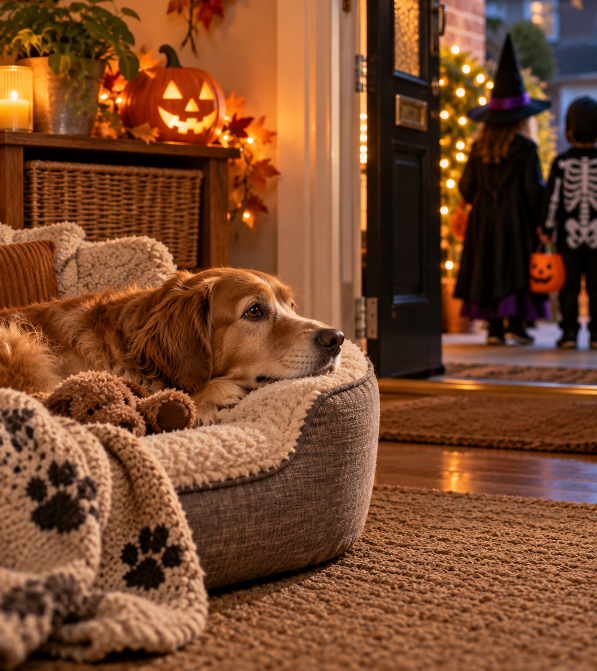
A Little Extra Care This Halloween
Halloween can be especially challenging for dogs who are sensitive to unfamiliar sounds, costumes or unexpected visitors.
If you’re expecting trick-or-treaters, consider a few simple precautions:
- Keep your dog safely away from the front door when answering it.
- Consider putting a note on the door asking visitors to knock quietly rather than ring the bell.
- Provide a comfortable space where your dog can relax away from the activity.
- Keep chocolate, sweets and Halloween decorations safely out of reach.
- Never force your dog to interact with visitors wearing unfamiliar costumes.
And remember, it’s perfectly fine to skip the Halloween excitement altogether if your dog finds it stressful.
Their comfort and wellbeing should always come first.
The Bottom Line: A Calmer Dog Starts With Understanding
Dogs don’t bark at the doorbell simply to make our lives difficult.
Whether they’re excited, worried or just letting us know that someone’s arrived, their reaction usually makes perfect sense from their perspective.
By understanding why your dog responds the way they do, practising calm routines and rewarding positive behaviour, you can help make unexpected visitors a little less chaotic.
It might take time, particularly if your dog has been practising their enthusiastic doorbell routine for years!
But with patience and consistency, even small improvements can make a big difference.
And who knows? One day, you might even be able to answer the door without the entire neighbourhood knowing someone’s arrived!
Happy Halloween from everyone at Broadleaf Grain Free!