5 Biggest Misconceptions About Feeding Your Dog
The Broadleaf Dog Guide | Dog Nutrition & Feeding Advice
We all want to give our dogs the best possible nutrition. But with so much information available about dog food, ingredients, protein levels and feeding routines, knowing what’s genuinely important isn’t always straightforward.
One article tells us that dogs need more protein. Another insists that certain ingredients should be avoided. And then there’s the advice passed between dog owners, often with the very best intentions.
The problem? Not everything we hear about feeding our dogs is quite as simple as it sounds.
So, let’s explore five of the most common misconceptions about dog nutrition, separate the facts from the fiction, and look at what really matters when choosing food for your dog.
1. “All Dogs Need Roughly the Same Amount of Food”
It’s tempting to think that feeding your dog is simply a matter of following the recommended quantity on the bag.
And while feeding guidelines are an excellent starting point, they’re exactly that — a starting point.
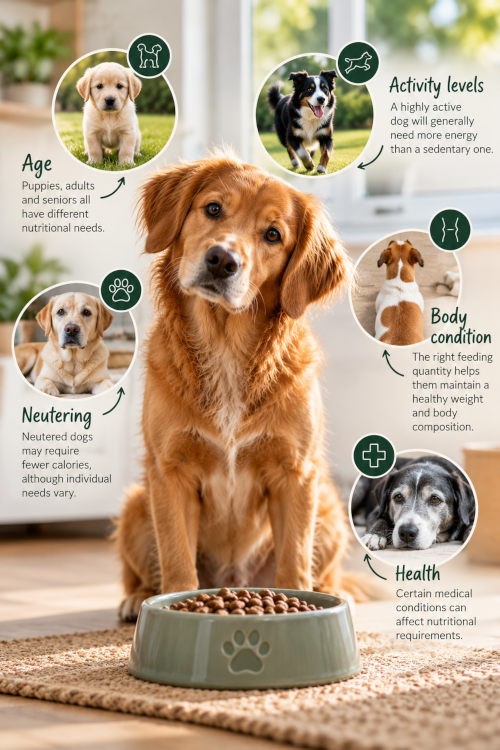
Two dogs of the same breed and weight can have very different nutritional and energy requirements.
Consider two Labradors. Both weigh 25kg, but one is a young, highly active dog enjoying long daily walks, while the other is older and spends much of the day relaxing at home.
Their calorie requirements may be quite different.
Several factors influence how much food a dog needs, including:
- Age: Growing puppies have different nutritional requirements from adult and senior dogs.
- Activity levels: A highly active dog will generally need more energy than a sedentary one.
- Body condition: A dog’s ideal feeding quantity should help them maintain a healthy weight and body composition.
- Neutering: Neutered dogs may require fewer calories, although individual needs vary.
- Health: Certain medical conditions can affect nutritional requirements.
What should you do instead?
Start with the feeding guide on your dog’s food packaging, but pay attention to their weight and body condition over time.
Ideally, you should be able to feel your dog’s ribs beneath a light covering of fat, and they should have a visible waist when viewed from above.
If they’re gaining or losing weight unexpectedly, their portions may need adjusting — ideally with guidance from your vet.
The takeaway: Feed the dog in front of you, not simply the number printed on the bag.
2. “Grain-Free Dog Food Is Automatically Better for Every Dog”
Grain-free dog food has become increasingly popular, but there’s a common misunderstanding about what the term actually means.
Grain-free simply means that a recipe doesn’t contain cereal grains such as wheat, rice, barley or maize.
It doesn’t automatically mean that the food is healthier, more nutritious or more suitable for every dog.
Some dogs may benefit from avoiding particular ingredients, especially where a food allergy or intolerance has been properly identified. However, many dogs can digest appropriately prepared grains perfectly well.
And grain-free doesn’t necessarily mean carbohydrate-free. Recipes may contain other sources of carbohydrate, such as potatoes or peas.
So what really matters?
Rather than focusing on the absence of one particular ingredient, consider the overall nutritional formulation.
A good dog food should provide:
- Appropriate amounts of protein and essential amino acids.
- The right balance of fats, vitamins and minerals.
- Suitable energy levels for your dog’s life stage and lifestyle.
- Ingredients that your dog tolerates well.
- Complete and balanced nutrition.
It’s also worth understanding that researchers have investigated a possible association between certain diets, including some grain-free formulations, and canine dilated cardiomyopathy (DCM), a serious heart condition.
The precise dietary factors involved have not been fully established, and grain-free foods have not all been shown to cause DCM. However, it’s an important reason not to assume that removing grains automatically makes a diet better.
If you’re considering a change for health reasons, speak to your vet.
The takeaway: Grain-free can be a suitable choice, but the quality and nutritional balance of the complete recipe matter far more than the label alone.
3. “The Higher the Protein Percentage, the Better the Dog Food”
Protein is essential for dogs.
It provides amino acids needed to maintain muscles, support normal growth, repair tissues and carry out numerous important functions throughout the body.
So surely a dog food containing 35% protein must be better than one containing 25%?
Not necessarily.
The percentage shown on the packaging tells you how much crude protein is present, but it doesn’t tell you everything about that protein.
There are several other important considerations.
Where does the protein come from?
Different protein sources provide different amino acid profiles. The combination of ingredients needs to supply the essential amino acids your dog requires.
How digestible is it?
Digestibility influences how effectively nutrients can be broken down and absorbed during digestion.
A higher protein percentage isn’t automatically beneficial if the protein is poorly utilised.
Is the overall recipe balanced?
Protein doesn’t work in isolation.
Dogs also need appropriate levels of fats, essential fatty acids, vitamins and minerals, alongside sufficient energy to support their daily activities.
Does your dog actually need more protein?
A growing puppy, a highly active working dog and an older dog with particular health considerations may have different nutritional requirements.
More isn’t automatically better — what matters is whether the food meets the individual dog’s needs.
What should you do instead?
Look beyond the headline protein percentage.
Consider the ingredients, nutritional analysis, suitability for your dog’s life stage and the expertise behind the formulation.
If you’re unsure what all those percentages and ingredients mean, our simple guide to reading a dog food label explains what to look for and how to make sense of the information on the packaging.
And for a more detailed explanation about protein in dog food, read our previous Broadleaf Dog Guide article: Does More Protein Mean Better Dog Food?
The takeaway: Protein quality, digestibility, amino acid balance and suitability are just as important as the percentage on the bag.
4. “Natural Dog Treats Don’t Really Count Towards Their Daily Food”
We all know that look.
Your dog sits beautifully, gives you their most convincing expression, and suddenly another treat seems entirely reasonable.
And when the treats are natural, it’s easy to assume that a few extras won’t make much difference.
But there’s an important distinction between natural ingredients and calorie content.
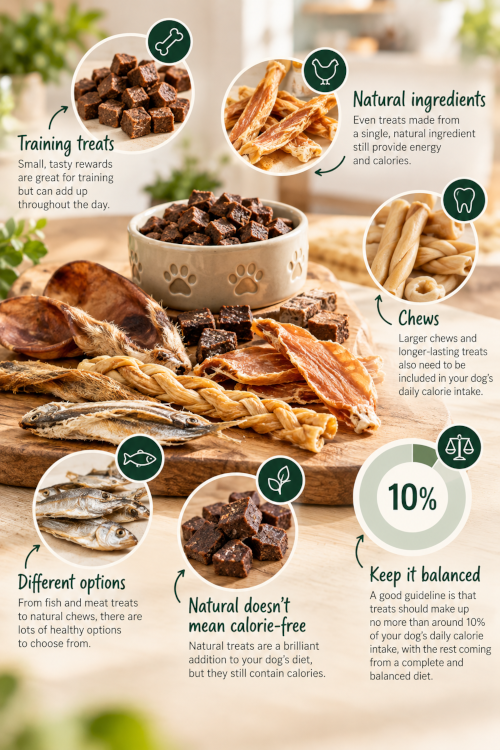
Even a treat made from a single, natural ingredient still provides energy.
And those calories can add up, particularly for smaller dogs.
For example, a small training reward might seem insignificant on its own. But when you’re practising commands repeatedly throughout the day, the total amount can become surprisingly substantial.
Larger chews and longer-lasting treats also need to be considered as part of your dog’s overall daily intake.
How many treats should a dog have?
A commonly recommended guideline is that treats should provide no more than around 10% of your dog’s daily calorie intake, with the remaining nutrition coming from an appropriate complete and balanced diet.
This helps ensure treats don’t displace important nutrients from their regular food.
Making treats work for your dog
Treats can play a valuable role in training, enrichment and strengthening the bond between you and your dog.
The key is choosing and using them sensibly.
- Use smaller rewards for repeated training exercises.
- Consider the size and calorie content of longer-lasting chews.
- Adjust daily food portions when treats make a meaningful contribution to calorie intake.
- Choose treats appropriate for your dog’s size, age and chewing habits.
- Always supervise your dog with chews.
At Broadleaf, our natural dog treat range includes options for training, chewing and enrichment, helping you choose something suitable for different occasions.
The takeaway: Natural treats can be a lovely addition to your dog’s day — but they still count towards their overall diet.
5. “If My Dog Looks Healthy, Their Diet Must Be Perfect”
A shiny coat, bright eyes and an enthusiastic appetite are all things we love to see in our dogs.
And while they can be encouraging signs of general wellbeing, they don’t necessarily tell us everything about nutritional health.
A dog might appear perfectly healthy while gradually gaining excess weight, losing muscle condition or receiving a diet that isn’t ideally suited to their changing needs.
Likewise, a dull coat or occasional digestive upset doesn’t automatically mean their food is to blame.
Health is influenced by many factors, including genetics, age, exercise, grooming, environment and underlying medical conditions.
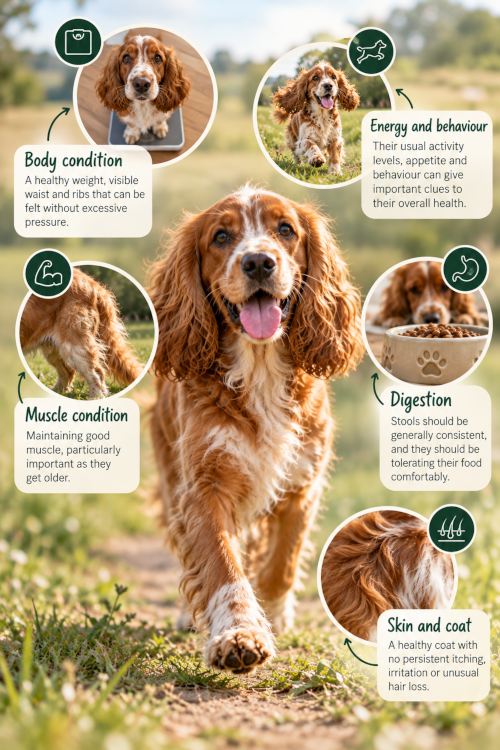
What should you look out for?
Rather than relying on appearance alone, take a broader view of your dog’s wellbeing.
Body condition: Are they maintaining a healthy weight, with a visible waist and ribs that can be felt without excessive pressure?
Muscle condition: Are they maintaining muscle, particularly as they get older?
Digestion: Are their stools generally consistent, and are they tolerating their food comfortably?
Energy and behaviour: Have you noticed any unexplained changes in their usual activity or appetite?
Skin and coat: Is their coat generally in good condition, without persistent itching, irritation or unusual hair loss?
Changes in any of these areas can have several possible causes, so persistent or unexplained symptoms should always be discussed with your vet.
Regular health checks and nutritional assessments are valuable, even when everything appears to be going well.
The takeaway: A healthy-looking dog is wonderful, but good nutrition is about supporting their long-term health, not simply how they look today.
So, What Really Makes a Good Dog Food?
If there’s one thing these five misconceptions demonstrate, it’s that good dog nutrition isn’t about chasing a single number, ingredient or fashionable claim.
It’s about understanding the complete picture.
The right food should provide appropriate, balanced nutrition for your dog’s age, size, activity levels and individual requirements.
It should come from a manufacturer that takes formulation, ingredient quality, nutritional adequacy and food safety seriously.
And perhaps most importantly, it should be a food your dog enjoys, tolerates well and can thrive on.
At Broadleaf Grain Free, we believe dog owners deserve clear information about what goes into their dog’s bowl.
That’s why we continue to explore ingredients, nutritional science and practical feeding advice through The Broadleaf Dog Guide — helping you make more informed choices for your four-legged family members.
Because when it comes to feeding your dog, understanding the facts is always a good place to start.
Explore the Broadleaf Grain Free dog food range or discover more practical advice in The Broadleaf Dog Guide.
Sources and Further Reading: WSAVA’s nutrition guidance, FEDIAF’s advice on treats and the FDA’s dietary DCM update.